
Preventive Dental Care · Park Ridge, NJ
Dental sealants are thin protective coatings applied to the chewing surfaces of back teeth. They fill the deep grooves where food and bacteria collect, making those surfaces easier to keep clean. At All Dental Solutions in Park Ridge, sealants are a quick and comfortable way to add another layer of cavity protection.
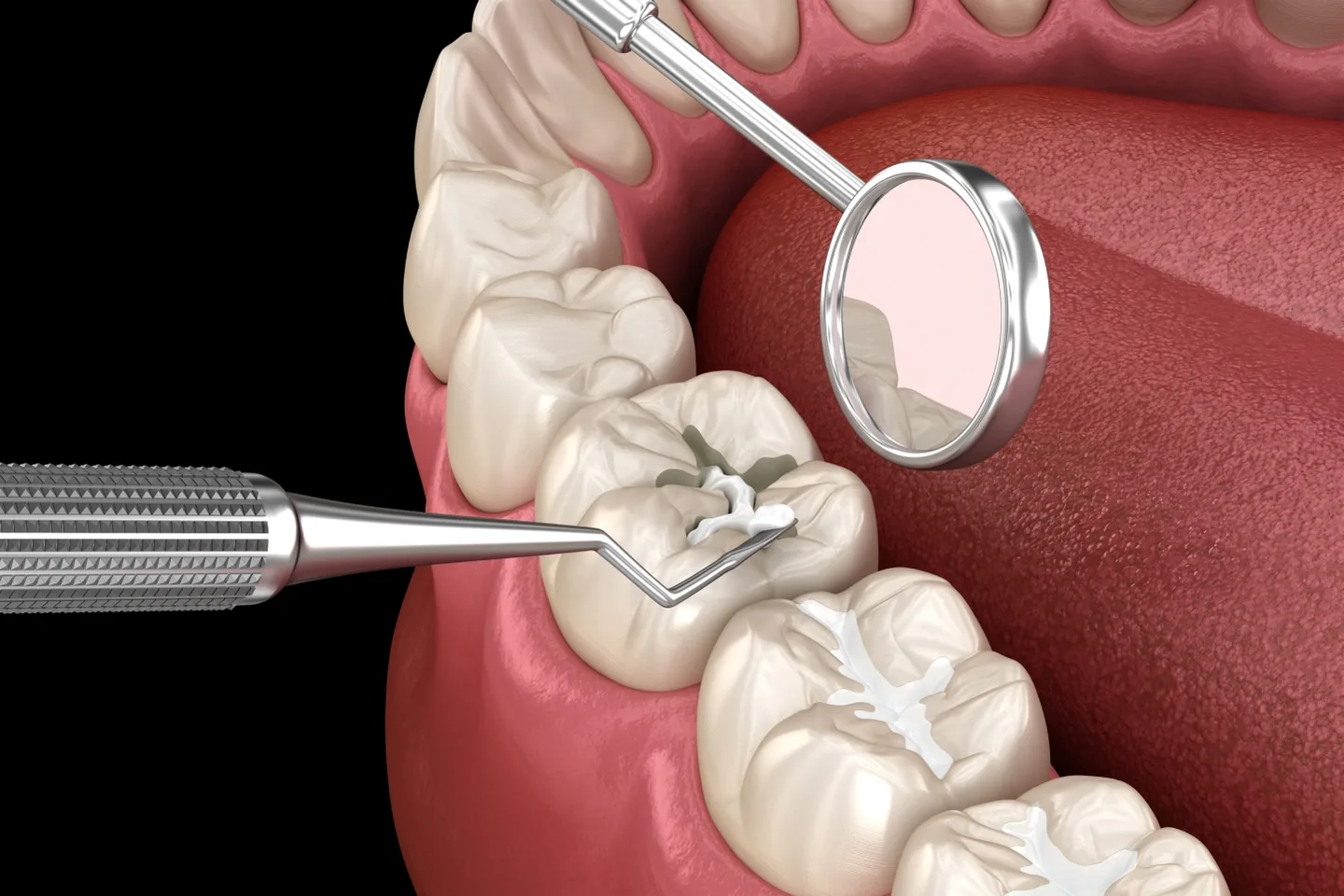
How They Work
Look closely at a molar and you will see pits and grooves across the chewing surface. Some are deep and narrow. Food and plaque settle into them, and a toothbrush cannot always reach the bottom.
A sealant is a thin coating that is applied over those grooves. Once it hardens, it forms a smooth, protective shield over the chewing surface. Bacteria and food debris have fewer places to hide, and the tooth is easier to clean at home.
Sealants protect the surfaces they cover. They do not protect the spaces between teeth or the gumline, so brushing, flossing, and regular checkups still matter.
Who It Helps
Dental sealants are commonly associated with children, but they may also benefit teenagers and adults with deep grooves in their back teeth. Your dentist can determine whether sealants are appropriate based on your individual needs and oral health.
Permanent molars typically erupt during childhood. Applying sealants soon after they come in can help protect these teeth against cavities while children develop consistent brushing habits.
Teenagers may benefit from additional protection, especially if they have a history of cavities or difficulty maintaining consistent oral hygiene. Sealants can help protect the deep grooves of their back teeth.
Some adults have deep pits and grooves in their molars that are difficult to clean thoroughly, even with good home care. Sealants can provide an additional layer of protection against decay.
Patients with a history of cavities may benefit from sealants on healthy back teeth that are still free of decay, helping reduce the risk of future cavities.
Teeth with existing decay may require a filling or other restorative treatment instead. Your dentist will examine the teeth before recommending sealants.
Why It Matters
Back teeth do most of the chewing and can be difficult to clean thoroughly, especially in the deep grooves of molars. This makes them more vulnerable to cavities. Dental sealants provide an extra layer of protection by helping keep food particles and bacteria from collecting in these areas.
Sealants are most effective as part of a broader preventive care plan that includes regular dental cleanings and exams, good daily oral hygiene, and healthy eating habits. Ask us at your next visit whether dental sealants may be a good option for you or your child.

Know the Difference
People sometimes confuse dental sealants and fillings, but they serve different purposes.
A sealant is applied to a healthy tooth to help prevent cavities by covering the deep grooves where food particles and bacteria can collect. No tooth structure needs to be removed before application.
A filling repairs a tooth that has already been damaged by decay. The decayed portion is removed, and the space is restored with a filling material to protect the tooth and restore its function.
Simply put, a sealant helps protect a tooth before decay develops, while a filling repairs damage after a cavity forms. Regular dental checkups allow your dentist to monitor sealed teeth and identify any signs of decay that may develop over time.
Several years
Many sealants last for several years
Lasting Protection
Dental sealants do not last forever. Chewing forces can gradually wear them down, and they may chip or become damaged over time. Many sealants last several years, depending on the material used, your bite, and daily habits.
That is why sealants should be checked during routine dental visits. If a sealant becomes worn or damaged, your dentist can recommend repairing or replacing it to maintain protection. Regular cleanings and exams provide a good opportunity to monitor their condition.
Step by Step
The process is quick, simple, and comfortable for most patients. Sealants are typically placed during a single appointment.
01
Plaque and food debris are removed from the chewing surface to prepare the tooth for the sealant.
02
The tooth is dried, and a special conditioning solution is applied to help the sealant bond securely to the enamel.
03
The liquid sealant material is carefully placed into the pits and deep grooves of the tooth.
04
A special curing light is used to harden the sealant, creating a smooth, protective coating over the chewing surface.
Placing dental sealants does not require drilling or injections, and there is typically no recovery time. Most patients can return to their normal activities immediately after the appointment.
Everyday Care
Caring for teeth with sealants is simple and involves the same good oral hygiene habits you should already follow.
Does Your Sealant Feel Rough?
If a sealant feels rough, uneven, or you notice that a piece has chipped or come off, contact our office. We can examine the tooth and determine whether the sealant needs repair or replacement.
Visit Us
Located at 70 Park Ave, Suite 1, in Park Ridge, New Jersey, All Dental Solutions welcomes families from Park Ridge and surrounding communities, including Montvale, River Vale, Hillsdale, Washington Township, and Woodcliff Lake. Led by Dr. Mihaela Krausz, our team is committed to providing gentle, comfortable dental care for patients of all ages.
If dental visits make you or your child feel nervous, let us know. Our guide to dental anxiety offers practical tips to help you prepare. We will take the time to answer your questions and make your visit as comfortable as possible.
FAQ
No. Placing dental sealants is generally painless and does not require drilling or injections. The process involves cleaning, preparing, and coating the tooth with a protective material.
Yes. Adults with deep grooves in their molars or a history of cavities may benefit from sealants. Your dentist will examine your teeth to determine whether they are appropriate.
No. Sealants protect only the chewing surfaces they cover. Daily brushing, flossing, and regular dental checkups are still essential for maintaining good oral health.
Many dental sealants last several years, although their lifespan varies depending on chewing habits and wear. Your dentist will check them during routine visits and recommend repair or replacement if needed.
Coverage depends on your insurance plan and may vary based on age and other plan requirements. We work with a wide range of dental insurance providers and can help you understand your benefits. Visit our insurance page for more information.
If you would like to know whether sealants are right for you or your child, we are happy to take a look. Book online or call All Dental Solutions at (201) 701-1423.