
Preventive Dental Care · Park Ridge, NJ
Dental sealants are thin protective coatings applied to the chewing surfaces of back teeth. They fill the deep grooves where food and bacteria collect, making those surfaces easier to keep clean. At All Dental Solutions in Park Ridge, sealants are a quick and comfortable way to add another layer of cavity protection.
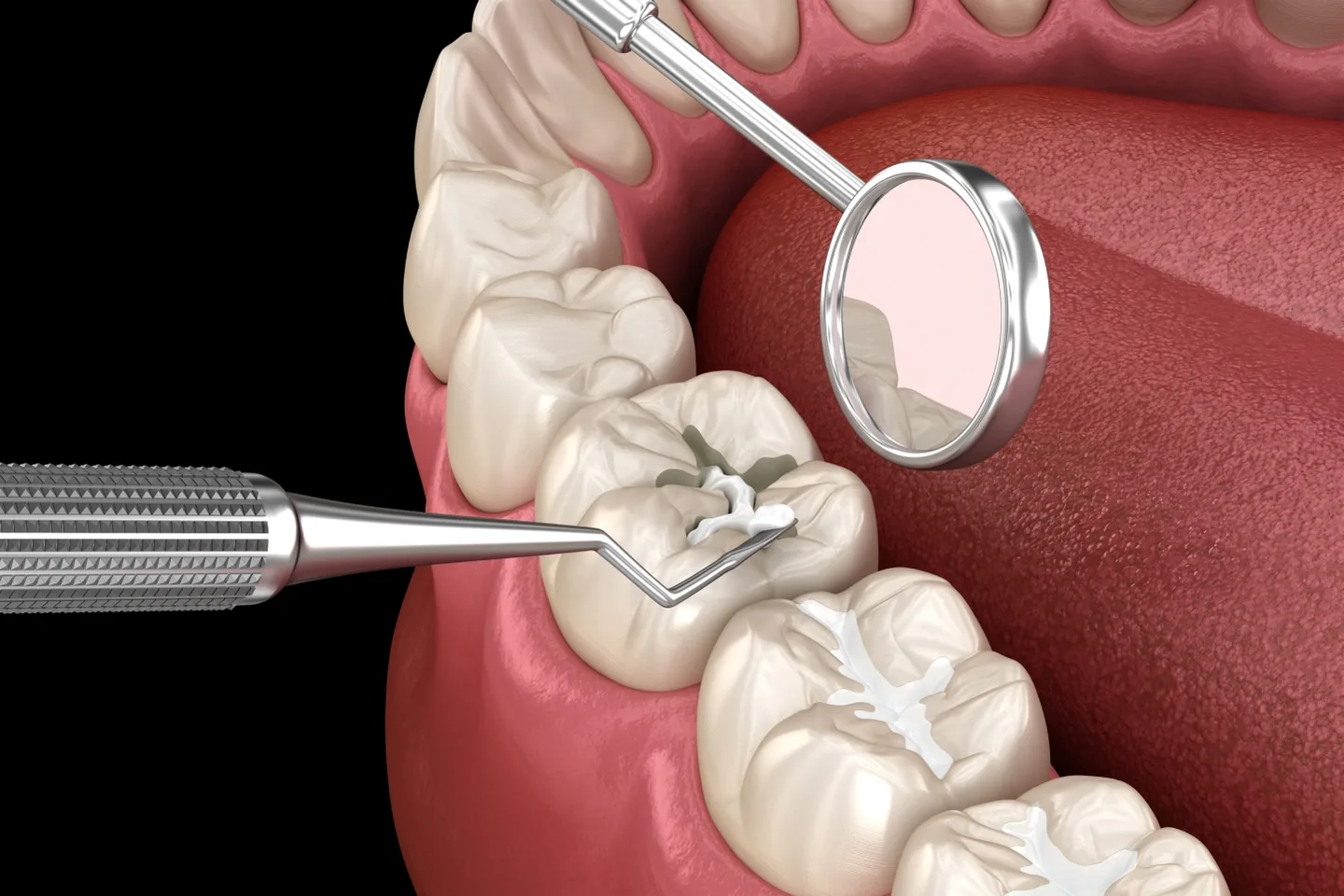
How They Work
Look closely at a molar and you will see pits and grooves across the chewing surface. Some are deep and narrow. Food and plaque settle into them, and a toothbrush cannot always reach the bottom.
A sealant is a thin coating that is applied over those grooves. Once it hardens, it forms a smooth, protective shield over the chewing surface. Bacteria and food debris have fewer places to hide, and the tooth is easier to clean at home.
Sealants protect the surfaces they cover. They do not protect the spaces between teeth or the gumline, so brushing, flossing, and regular checkups still matter.
Who It Helps
Sealants are often thought of as a children’s treatment, but they can suit a wider group of patients. Your dentist will decide whether they make sense for your teeth after an exam.
Permanent molars usually come in during childhood, and sealing them early can protect them while brushing habits develop.
Teens often snack more and may brush less consistently, so sealing their back teeth can add helpful protection during these busy years.
Some adults have molars with deep pits that are hard to clean, even with good home care. A sealant can make those teeth easier to keep clean.
If you have had cavities in the past, sealants may be one way to protect the back teeth that are still healthy and free of decay.
A tooth that already has decay in the groove may need a filling instead. The dentist will check before recommending a sealant.
Why It Matters
Back teeth do most of the chewing, and they are among the hardest to keep clean. A cavity in a molar often means a larger repair than the same problem on a front tooth. Sealants are one of the simpler tools a dental office has for lowering that risk.
They are also one part of a wider preventive plan. Cleanings, exams, good home care, and sensible snacking all work together. If you want to know where sealants fit in your own plan, ask at your next visit.

Know the Difference
People often confuse the two, but they do different jobs.
It covers a healthy tooth to help keep decay from starting, so no part of the tooth has to be removed first.
It repairs a tooth after decay has already damaged it, which means removing the damaged part before the filling is placed.
Put simply, a sealant protects a tooth before the problem begins, and a filling fixes it afterward. If a sealant covers a groove that later develops a problem, the dentist can usually spot it at a checkup.
Several years
Many sealants last for several years
Lasting Protection
Sealants do not last forever. Chewing wears them down over time, and they can chip or wear thin. Many last for several years, but how long yours lasts depends on the material, your bite, and your habits.
That is why we check them at routine visits. If a sealant has worn away or chipped, the dentist can repair it or apply a new one. Your next cleaning and exam is the natural time to do it.
Step by Step
The process is simple, and most patients find it easy. Sealants are typically placed in a single appointment.
01
Plaque and debris are removed from the chewing surface so the sealant can bond properly.
02
The tooth is dried and prepared so the sealant sticks firmly to the chewing surface.
03
The sealant material is carefully painted into the pits and deep grooves of the tooth.
04
The coating sets and hardens so it forms a smooth, protective layer over the tooth.
Placing a sealant does not involve drilling or injections, and there is usually no recovery time. You can generally go back to your day after the visit, but follow any instructions your dentist gives you.
Everyday Care
Looking after sealed teeth is mostly what you already do.
Sealant feel rough?
If a sealant feels rough or you notice a piece has come off, call the office. A quick check is usually all that is needed.
Visit Us
Our office is at 70 Park Ave, Suite 1, in Park Ridge, New Jersey. We see families from Park Ridge and nearby towns, including Montvale, River Vale, Hillsdale, Washington Township, and Woodcliff Lake. Dr. Mihaela Krausz leads the practice, and the team focuses on gentle, comfortable care.
If dental visits make you or your child nervous, let us know. Our guide to dental anxiety offers some practical ideas, and the team will go at a comfortable pace.
FAQ
Placing a sealant does not involve drilling or injections, and most patients find it comfortable. The steps are cleaning, preparing, and coating the tooth.
Yes, in some cases. Adults with deep grooves in their molars or a history of cavities may benefit. The dentist will check your teeth first.
No. Sealants only protect the chewing surfaces they cover. You still need to brush, floss, and keep your regular visits.
It varies. Many last for several years, but they can wear or chip. Your dentist checks them at routine visits and can reapply them when needed.
Coverage depends on your plan and sometimes on age. We work with a wide range of insurance providers, so call us and we will help you understand your benefits. Our insurance page has more information.
If you would like to know whether sealants are right for you or your child, we are happy to take a look. Book online or call All Dental Solutions at (201) 701-1423.