
Endodontic Care · Park Ridge, NJ
Root canal therapy treats a tooth when the soft tissue inside it, called the pulp, becomes inflamed or infected. During treatment, the dentist removes the affected pulp, carefully cleans and disinfects the inside of the tooth, and seals it to help eliminate infection and preserve your natural tooth.
At All Dental Solutions in Park Ridge, New Jersey, treatment begins with a thorough examination to identify the source of the problem. We take the time to explain your diagnosis, discuss treatment options, and help you understand what to expect every step of the way.
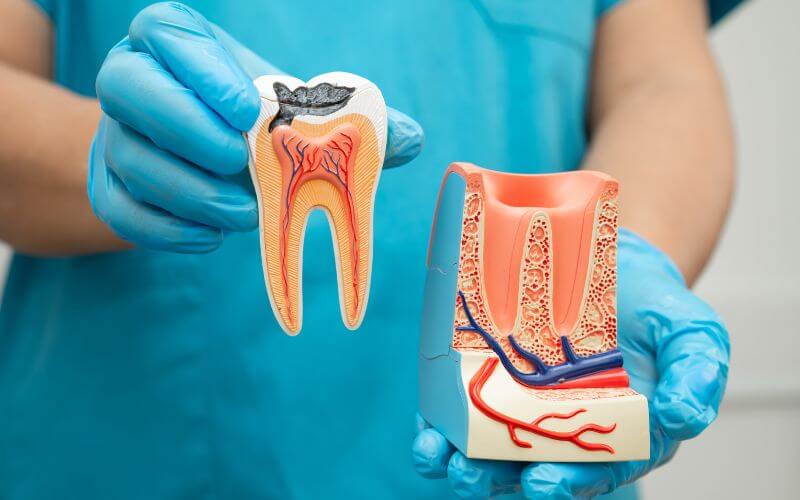
Tooth Anatomy
Every tooth has three main layers: a hard outer layer called enamel, a softer layer beneath it called dentin, and an inner portion called the pulp. The pulp contains nerves and blood vessels and extends through narrow channels inside the roots, known as root canals.
When bacteria reach the pulp, it can become inflamed or infected. This may result from deep decay, cracks, repeated dental procedures, or an injury. Without appropriate treatment, the infection can spread to the surrounding tissues and bone.
Aftercare
A few simple habits help the treated tooth heal and last.
Avoid chewing hard foods on that side until the final restoration is in place.
Keep brushing and flossing as normal, being gentle around the treated area.
Attend any follow up appointments, especially the one for your crown.
Call us if your bite feels uneven, swelling returns, or pain persists.
Treated teeth still need regular care. Decay can form around the restoration, so keep up with routine cleanings and exams.
Keep Your Smile
Whenever possible, preserving your natural tooth is often the best option. A natural tooth supports comfortable chewing, helps maintain proper alignment of neighboring teeth, and preserves the surrounding jawbone.
If extraction is necessary, replacement options such as a dental implant or bridge may involve additional procedures, time, and expense. That is why saving a natural tooth whenever it can be successfully treated is often worth considering. Your dentist will help determine the best option based on the tooth’s condition.
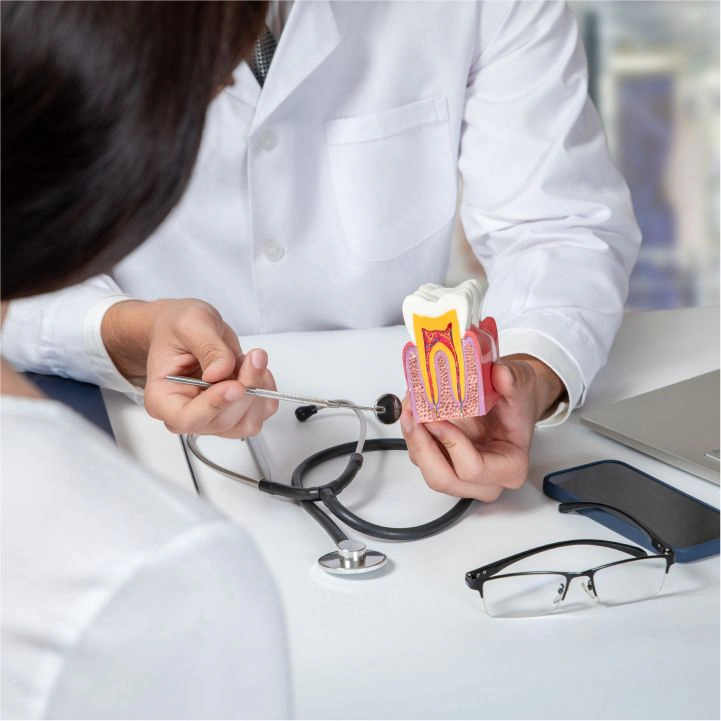
Pressure, not pain
Most people feel pressure rather than sharp pain
Your Comfort
With modern dental techniques and local anesthesia, most patients feel pressure or vibration rather than pain during root canal treatment. In many cases, the discomfort comes from the inflamed or infected tooth itself, and treatment is intended to relieve it.
After the procedure, mild tenderness or sensitivity may occur for a few days. Your dentist will provide instructions on managing discomfort and recommend appropriate pain relief if needed. If pain worsens or swelling develops, contact our office.
Step by Step
Here is what you can generally expect during the procedure.
01
The dentist examines the tooth and takes digital X-rays to evaluate the roots and determine whether the pulp is affected.
02
The area is numbed with local anesthesia to keep you comfortable throughout treatment. If you feel nervous, our dental anxiety tips may help you prepare for your visit.
03
A small opening is made in the tooth to access and remove the damaged pulp. The root canals are then carefully cleaned, disinfected, and shaped.
04
Once the canals are cleaned and shaped, they are filled with a specialized material and sealed to help prevent bacteria from re-entering.
05
After root canal treatment, a crown is often recommended to protect the tooth and restore its strength and function. The type of restoration depends on the tooth’s location and how much healthy tooth structure remains.
Watch For
Some root canal problems cause obvious pain, and others are quiet. Watch for these signs:
Not Every Infected Tooth Causes Pain
A tooth can have an infection even when symptoms are mild or absent, making regular dental exams important for early detection. Our guide on how to know if you need a root canal explains common warning signs to watch for.
If you experience severe tooth pain or facial swelling, you may have a dental infection that needs prompt attention. Read our guide on what to do when you have a dental abscess and contact our office promptly.
Visit Us
Located at 70 Park Ave, Suite 1, in Park Ridge, New Jersey, All Dental Solutions welcomes patients from surrounding communities, including Montvale, River Vale, Hillsdale, Washington Township, and Woodcliff Lake. Dr. Mihaela Krausz and her team are committed to providing gentle, comfortable care in a welcoming environment.
If you are experiencing tooth pain or have been told you may need a root canal, we are here to help. We begin with a thorough examination, explain our findings, and discuss the most appropriate treatment options for your tooth.
We work with a wide range of dental insurance plans. Visit our insurance page to learn more about checking your benefits.
FAQ
The tooth is numbed with local anesthesia, so most patients feel pressure rather than sharp pain during treatment. Mild tenderness or sensitivity may occur for a few days afterward. If you feel anxious, let us know so we can help make your visit as comfortable as possible.
Often, but not always. A crown is commonly recommended to protect and strengthen a treated tooth, especially a back tooth. Your dentist will recommend the appropriate restoration based on the tooth’s condition and how much healthy structure remains.
Treatment time depends on the tooth, the number of root canals, and the complexity of the infection. Your dentist can provide a better estimate after examining your tooth and X-rays.
An infected or severely inflamed tooth may worsen without treatment. Infection can spread to the surrounding tissues and bone, potentially leading to more extensive treatment or tooth loss. An examination can help determine whether root canal therapy is necessary.
Yes. A treated tooth can still develop new decay, cracks, or problems with its restoration over time. Regular dental checkups, good oral hygiene, and a properly maintained crown or filling help protect the tooth and extend its lifespan.
If you have tooth pain, swelling, or sensitivity that will not go away, do not wait. Book online or call All Dental Solutions at (201) 701-1423. For after hours guidance, see our emergency dentistry page.